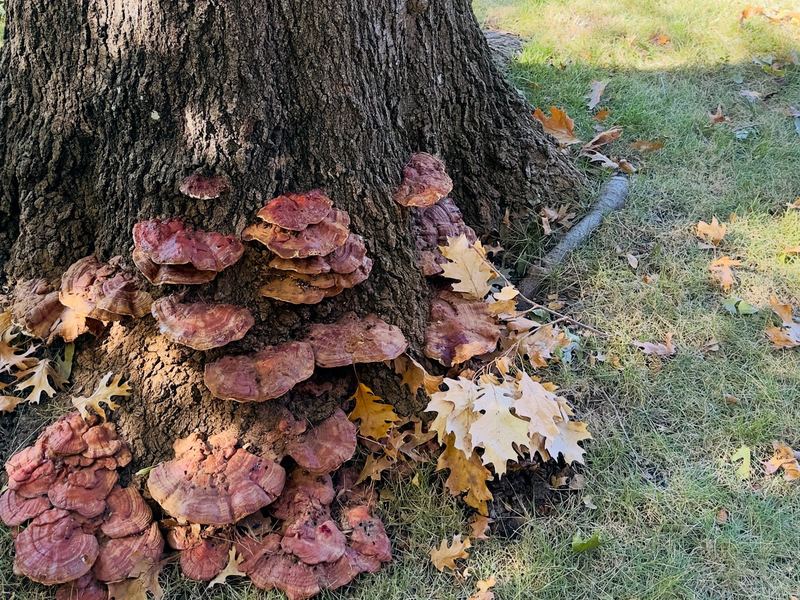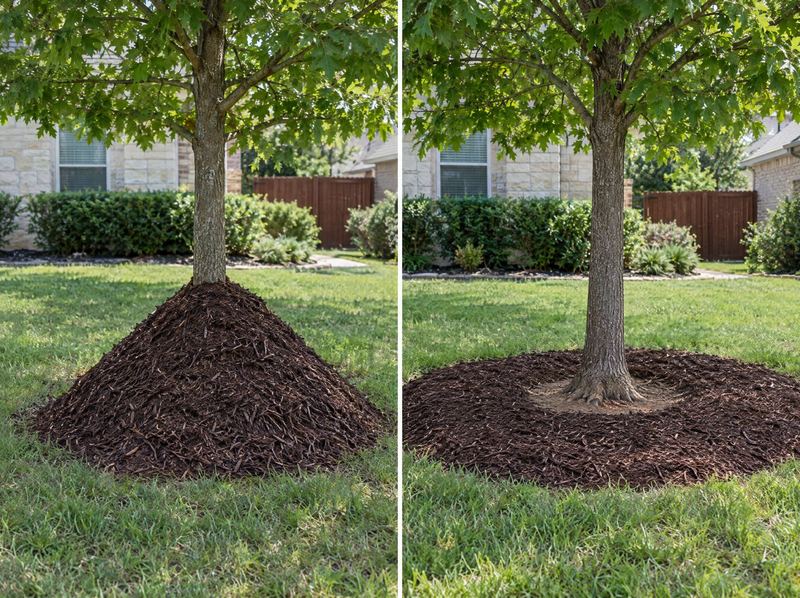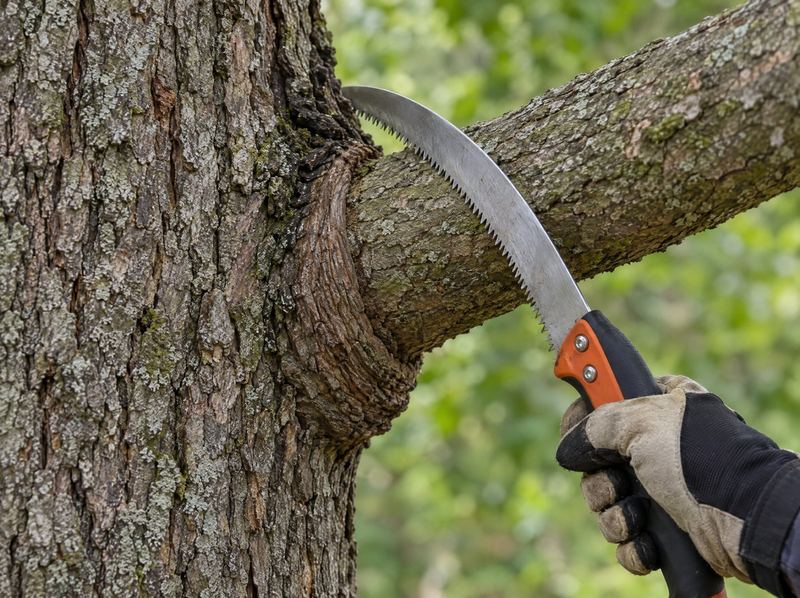
Early leaf drop is the tree talking.
Every tree drops its leaves in fall, so fall is the season a struggling tree hides in plain sight.
The question this tip answers
Why is my tree dropping its leaves early?
Timing and pattern separate a normal drop from a distress signal.
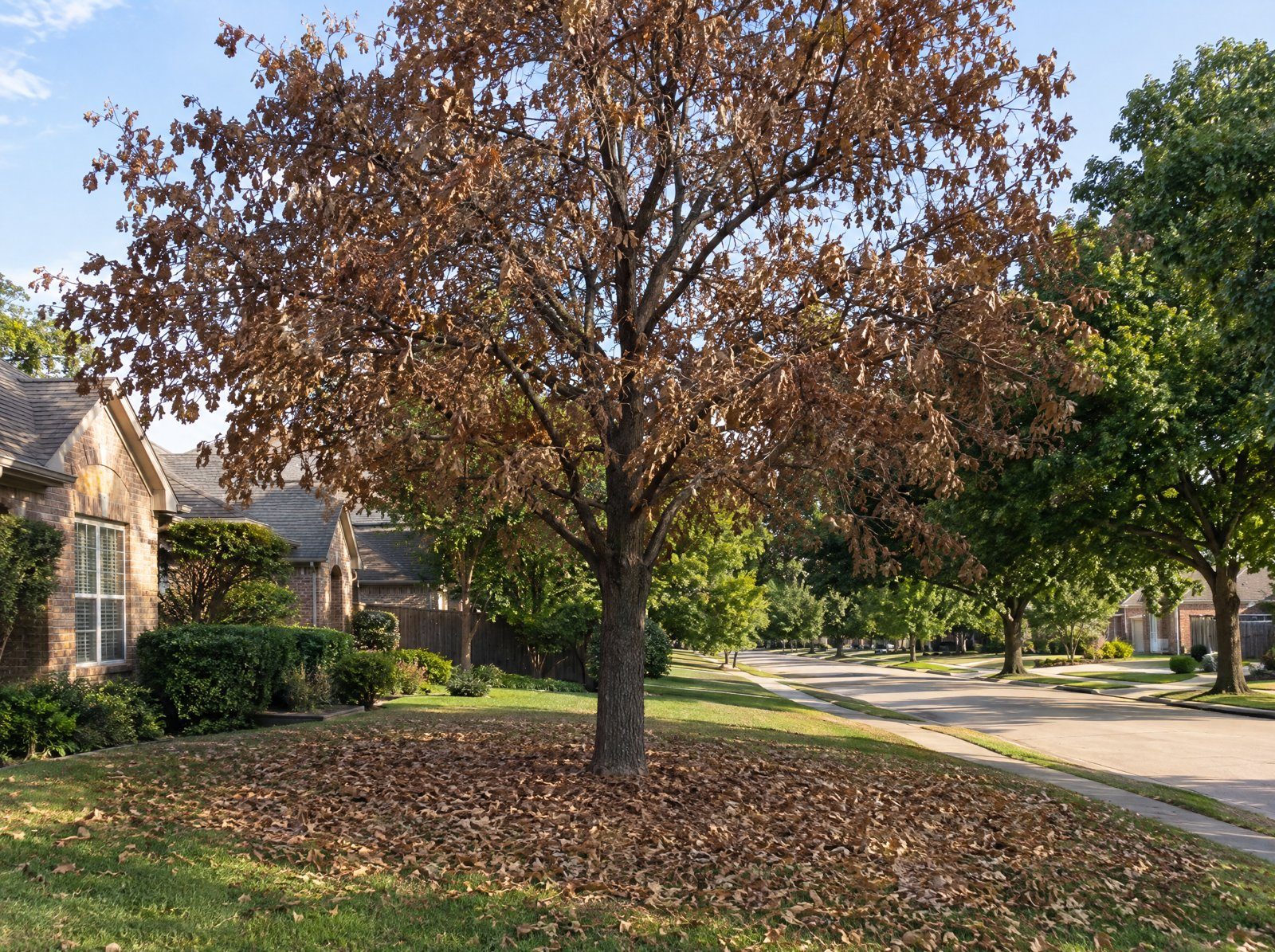
In Collin County, a healthy cedar elm or red oak holds color into November. Live oaks hold most of their leaves through winter and drop them in spring when the new ones push. So a tree going bare in September is telling you something, and so is one dropping leaves that skipped the color and went straight to brown.
Three patterns to know.
Early and brown across the whole canopy: the tree ran out of water this summer and cut its losses. Drought stress. It'll leaf out next spring, and it'll do it with less in the tank.
Yellow leaves with green veins still showing: chlorosis, which means the tree can't get iron out of our clay soil. It's a soil problem more than a tree problem, and it doesn't fix itself.
One section bare while the rest looks fine: that's the one to call about. A single dead limb or one dead side points at something local. A girdling root, a crack, decay in that branch, or a borer working under the bark.
Take a photo now, and take one next September. Two falls side by side tell you more about a tree than a year of looking at it every day.

Want an arborist to look at yours?
Book a free consultation. An ISA Certified Arborist will walk the tree with you and tell you what it needs.