The Homeowner's Field Guide to
Prescription tree pruning.
Every tree gets a prescription. Our arborist finds what's wrong with your tree, then writes the prescription that fixes it.
Section 01
Before anyone climbs, somebody has to look.
Pruning is choosing which branches come off a tree, then placing each cut where the tree can seal it. Every cut stays in the wood for the rest of the tree's life, so every cut needs a reason: a dead limb, a weak fork, too much weight over the roof.
We call it a prescription for the same reason a doctor examines you before writing one. Your tree's problems decide the prune.
John had paid other companies to work on his big oak for years and never liked the result. Before he signed with us, our arborist walked him through the oak with a laser pointer, showing which large limbs would come out and which branches would take over. He wrote that the result was outstanding, and far different from past years.
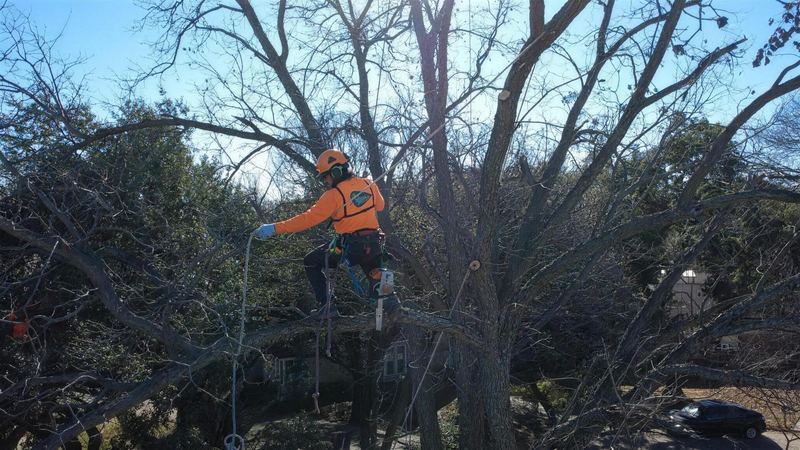
Every prescription starts with a walk around the tree. Our arborist finds the problems, then writes the prune that fixes them and tells you why.
The 3 prunes in this guide are the ones we write most on shade trees: Crown Structure, Crown Reduction and Crown Clean.
Joshua Tree Experts has 2 ISA Certified Arborists on staff, Stephen Dodson (ISA TX-4910A) and Benjamin Vargas (ISA TX-4848A).
Section 02
The 3 prunes we prescribe most.
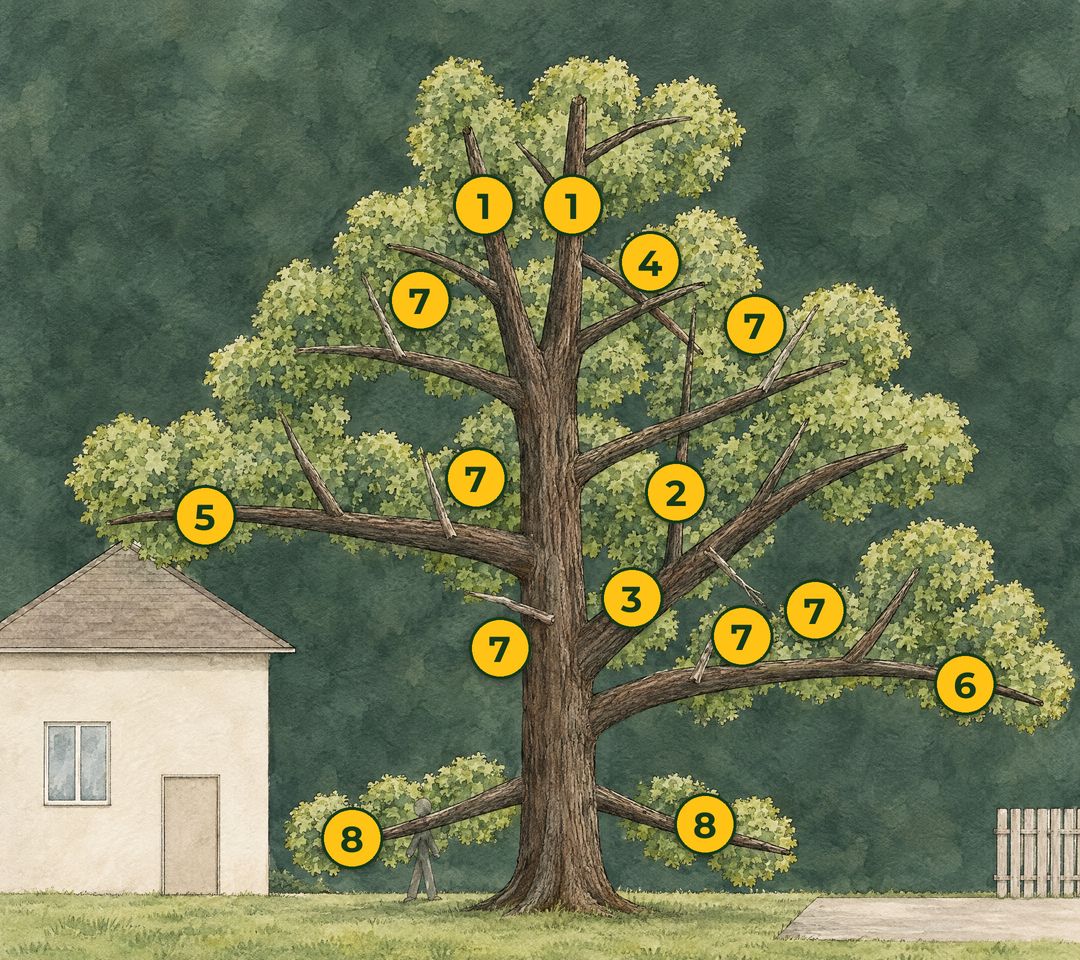
This tree has 8 problems:
- 2 main stems racing each other to the top
- An upright branch racing them
- A limb more than a third as thick as the trunk
- 2 limbs crossing inside
- A long limb over the roof
- Another over the drive
- Deadwood
- Low limbs over the lawn
Those main stems are the tree's leaders.
For a tree like this, our arborist prescribes 1 of the 3 prunes. We show you the other 2 so you can see the trade-off.
You pay for where the climber goes in your tree. Every prescription uses the same cuts and sends the climber to a different part of it.
Dotted lines show what each prune takes out: red for Crown Clean, gold for what Crown Reduction adds, blue for what Crown Structure adds.
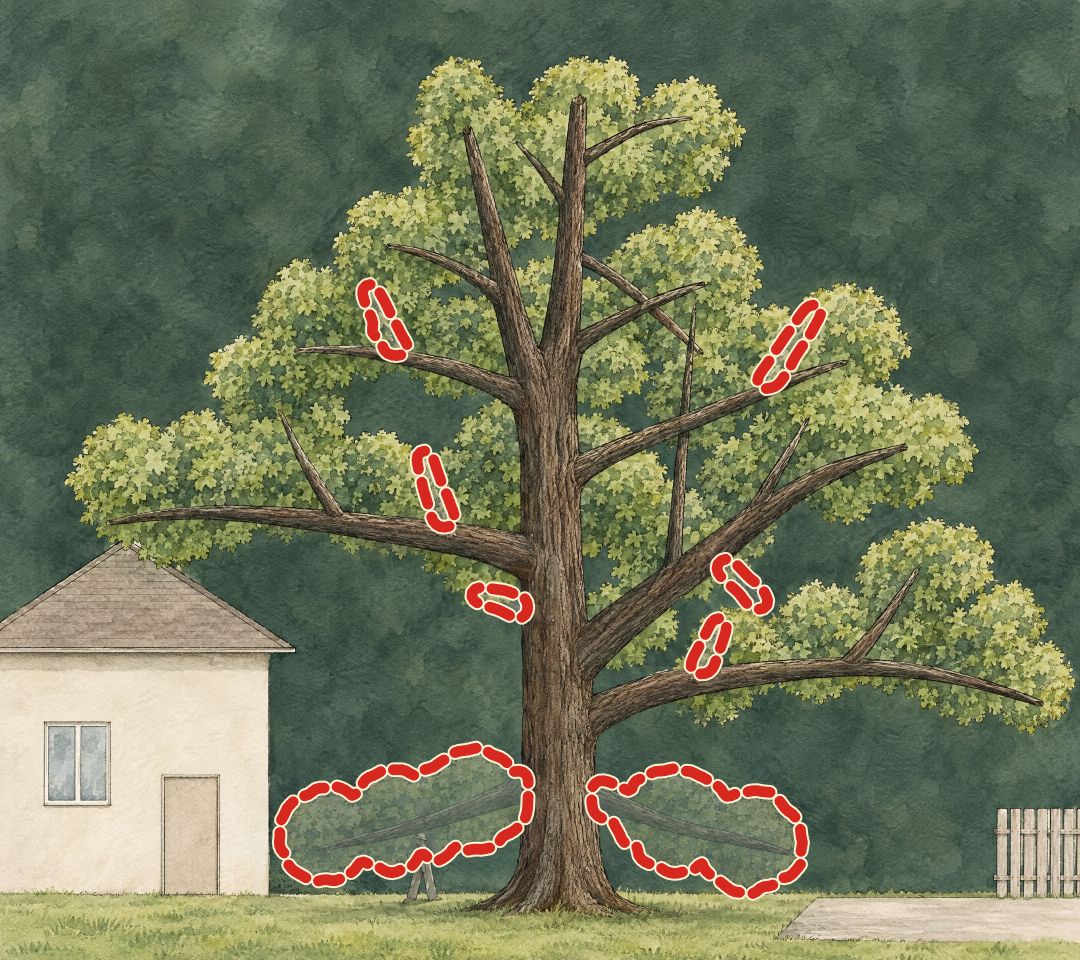
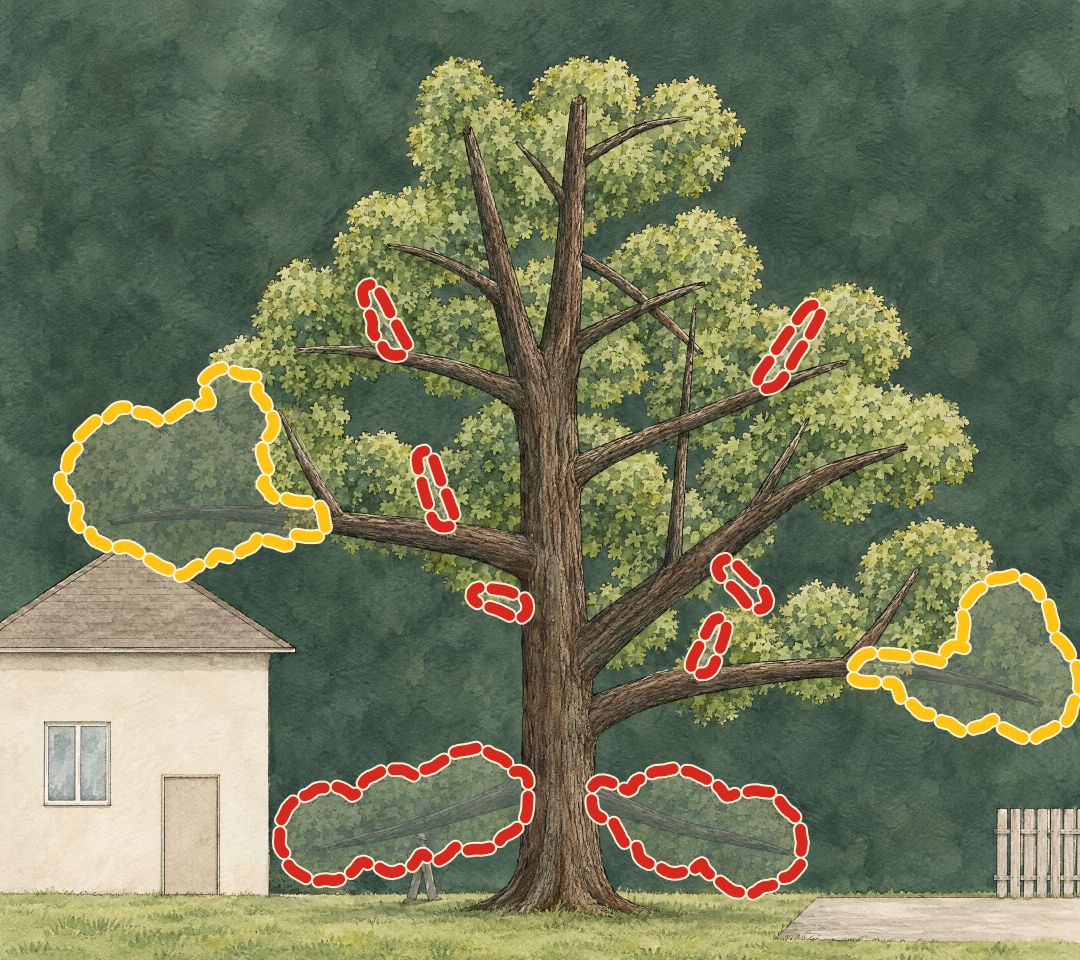
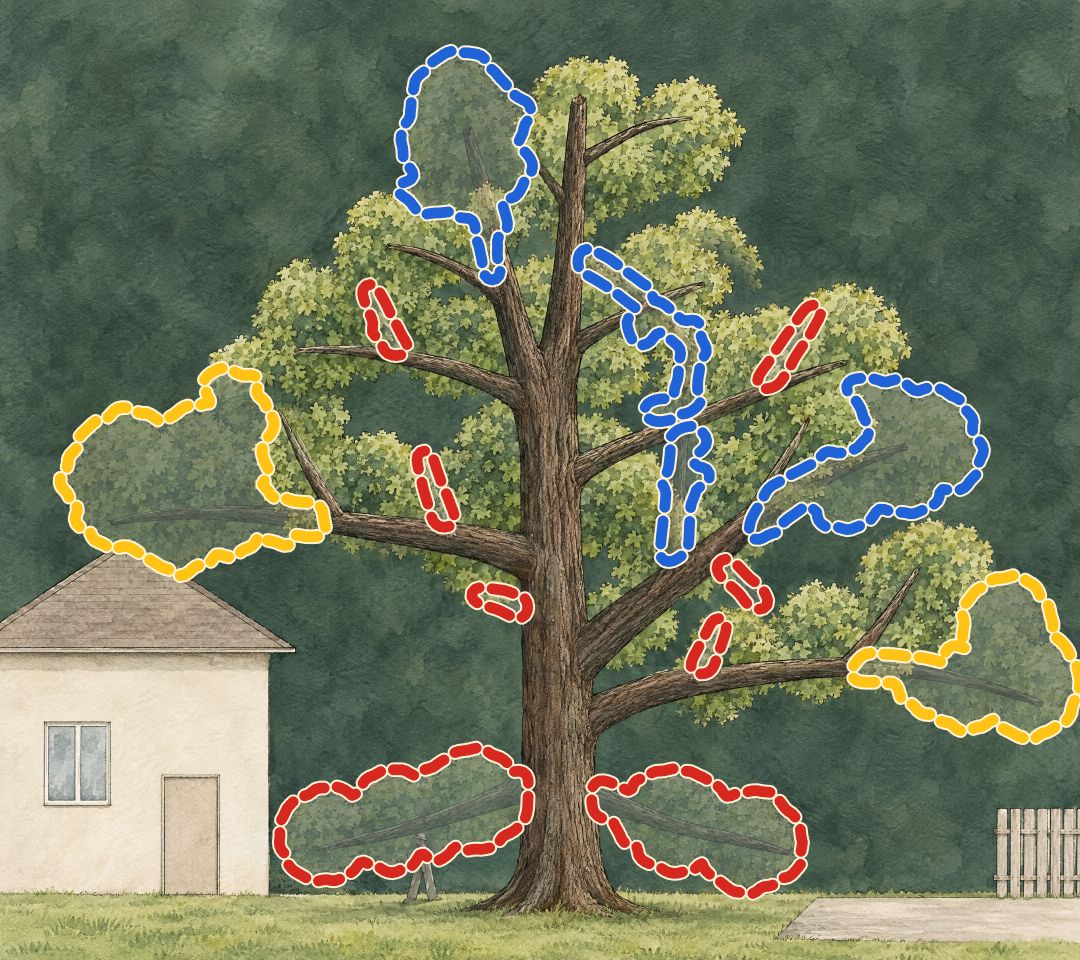
Each prune includes everything in the one before it.
Dead and low, plus the edges, plus the frame.
Crown Structure Prune
We fix the frame.
It fixes problems in the frame: 2 leaders racing each other to the top, a limb more than a third as thick as the trunk, and limbs crossing inside. Arborists call racing leaders codominant stems. We shorten the weaker leader and the thick limb, and the crossing limb and the racing upright come out.
Pruning can't fix decay, a fork that has already split, or root problems.
The climber works high and in the center.
Dead and low, plus the edges.
Crown Reduction Prune
We take the weight off the edges.
It fixes long, heavy limbs over the roof, drive, street, fence or pool. We shorten each one back to a side branch, which takes weight off the end.
It leaves the frame as it is. If 2 leaders fork 40 feet up, that fork is still there afterward.
The climber works out on the ends of the long limbs.
Dead and low.
Crown Clean Prune
We clear the dead and the low.
It fixes deadwood, broken and hanging limbs, and low limbs over the lawn, drive and walk. We bring the low limbs up to an even line. When taking a low limb off would raise the tree too far, we shorten it instead.
It leaves the frame and the long limbs at the edges alone.
The climber works on the deadwood and the lower canopy.
Each prune's Scope meter shows how much of the tree it reaches, in order: 1 step for the dead and low, 2 with the edges, 3 with the frame.
Section 03
What we find decides what we write.
Say the walk finds trouble in the frame, like 2 leaders racing for the top. That's a Crown Structure Prune, and our arborist points up at the fork: "The problem is up here. Crown Reduction and Crown Clean don't get a climber to this fork."
If the frame is sound and the trouble is long, heavy limbs over the house or drive, it's a Crown Reduction Prune. "Your frame is fine. The risk is out here on the ends."
If the frame is sound, nothing heavy hangs over the house, and the trouble is deadwood and low limbs, it's a Crown Clean Prune.
Some old trees have frame problems we can't fix without taking too much of the tree at once. For those, we prescribe a Crown Reduction Prune and talk with you about risk: "At this age, we can't rebuild this frame, so we'll take the weight off the side with the higher odds of failing."
"Can we just do the dead stuff for now?"
Yes. That's a Crown Clean Prune, and we write the problem we found on your proposal in plain words, so it's on record.
"Does my tree need this?"
The fork gets weaker every year, and the limb over the roof gets heavier every year, so the odds of a failure go up with time. Nobody can tell you whether it happens this year.
Section 04
Where the cut goes.
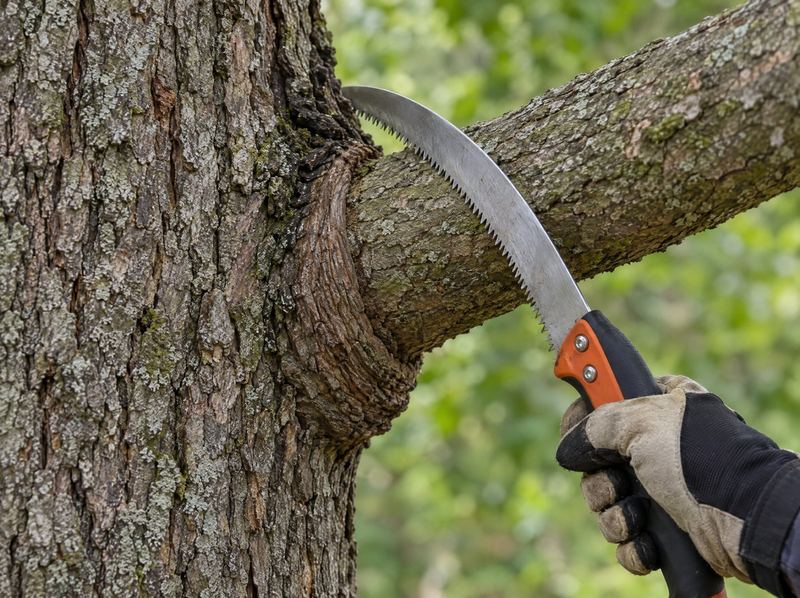
Look where a limb meets the trunk. There's a swollen collar of tissue at the joint, with a wrinkled ridge of bark on top. That's the branch collar, and it grows the tissue that closes the wound when the limb comes off.
A tree walls off a wound. It grows new tissue around the wound and seals the decay behind a barrier, which arborists call compartmentalization. Where the cut goes decides whether it works.
When we take a limb off, the cut goes just outside the collar and leaves it whole. The tree grows a ring of new wood in from the edges and seals the wound in 2 or 3 years.
When we shorten a limb, we take it back to a side branch at least a third as thick as the piece that comes off. That branch is big enough to take over.
The small inside branches stay on all 3 prunes.
"Won't that hurt the tree?"
We match the dose to the prune and the season. In summer heat we take no more than the tree needs, since a thin-barked tree can sunscald once the leaves that shade its bark come off. In fall and through the dormant season, we can take more. No set percentage fits every tree, so the dose goes into each tree's prescription. Deadwood never counts against it. When a tree needs more, our arborist writes what waits for next time on your proposal. That's why a tree doesn't look scalped when we leave.
Section 05
The cuts we never make.
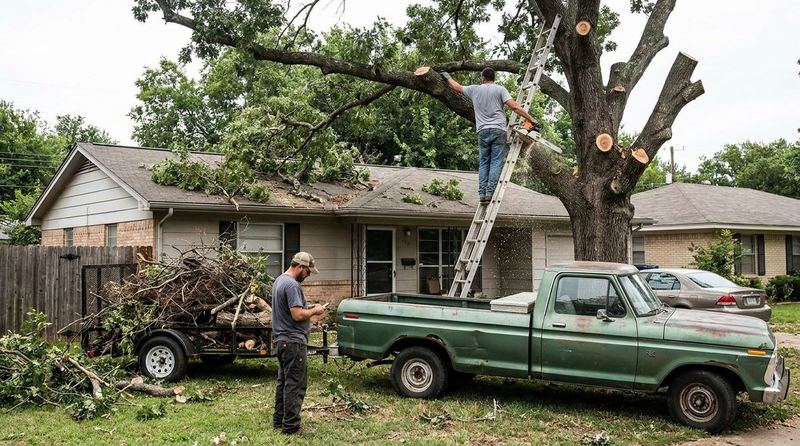
Somebody knocks on your door after a storm with a truck and an offer: cut the tree back hard and make it safe. That offer is topping, the first of 6 cuts we never make.
Each of the 6 leaves damage the tree can't undo on its own. Find one in your tree, and our arborist will show you what it needs.
4 cuts in the wrong place
Topping
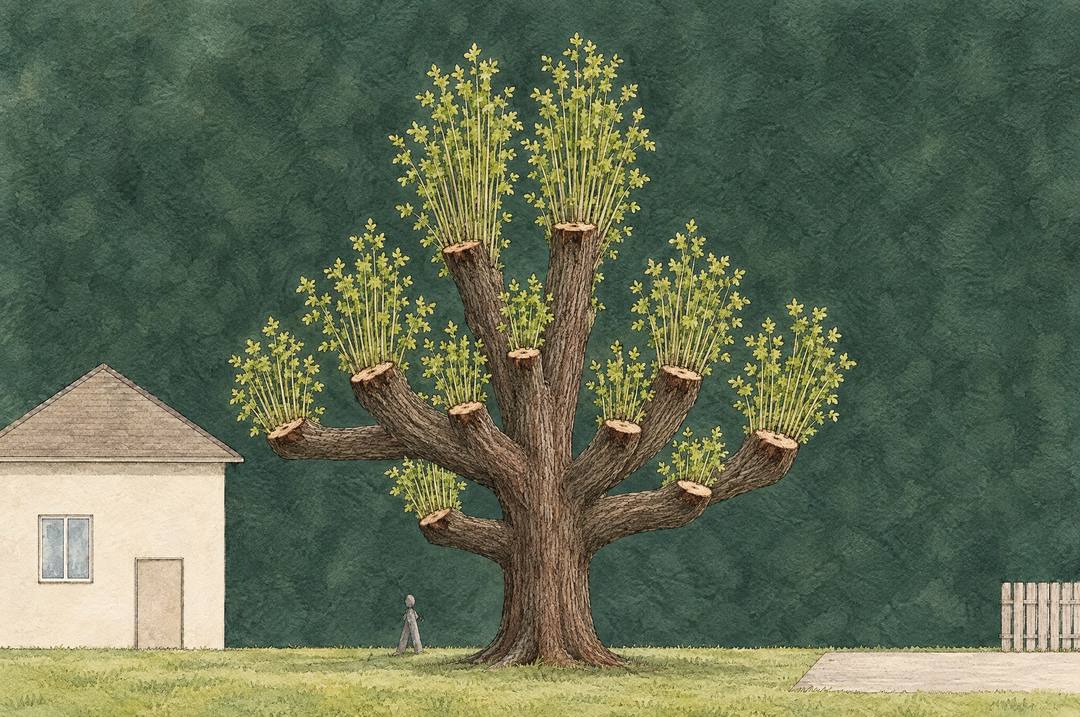
Topping takes big limbs back to stubs, wherever the saw lands. The tree loses most of its canopy, and with it most of its food supply, so it spends stored energy on a flush of shoots from the surface layer of the wood. In 5 years it's taller and denser, and those shoots snap in wind. Every stub decays. Topping is a haircut with a chainsaw, and no arborist writes it.
Topping crape myrtles
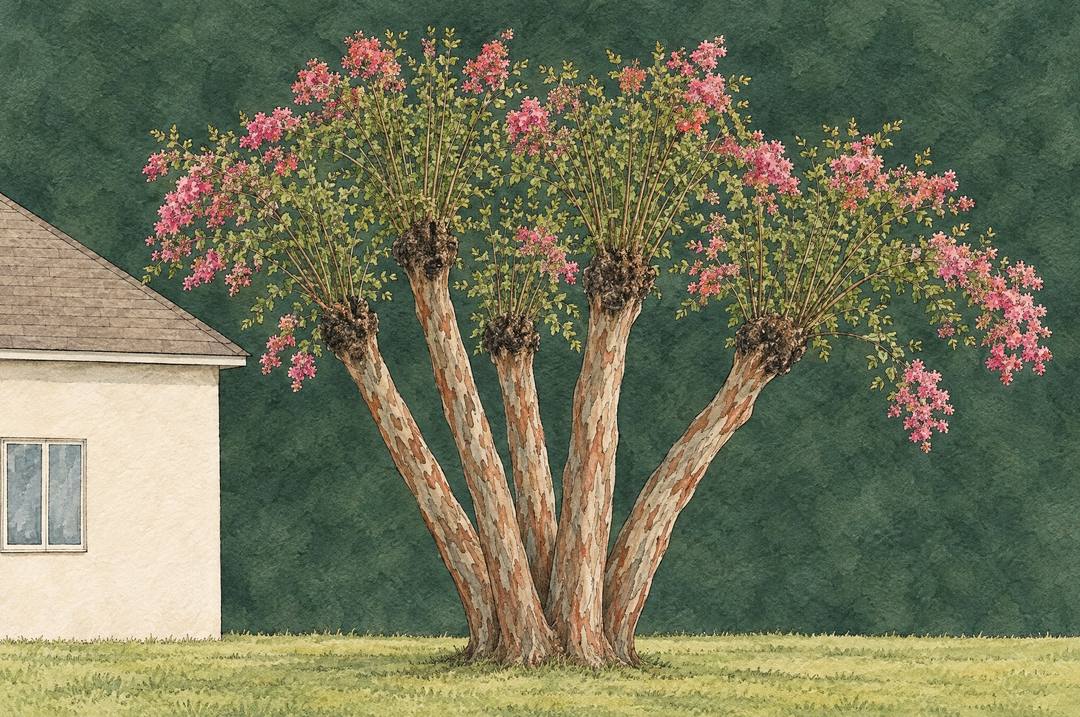
Taking a crape myrtle's big limbs back to stubs is topping too, and people call it crape murder. The crape myrtle answers like any topped tree, with weak shoots and decay at every stub. Fixing topped crape myrtles is recurring work for us on Collin County HOA properties.
Heading cuts
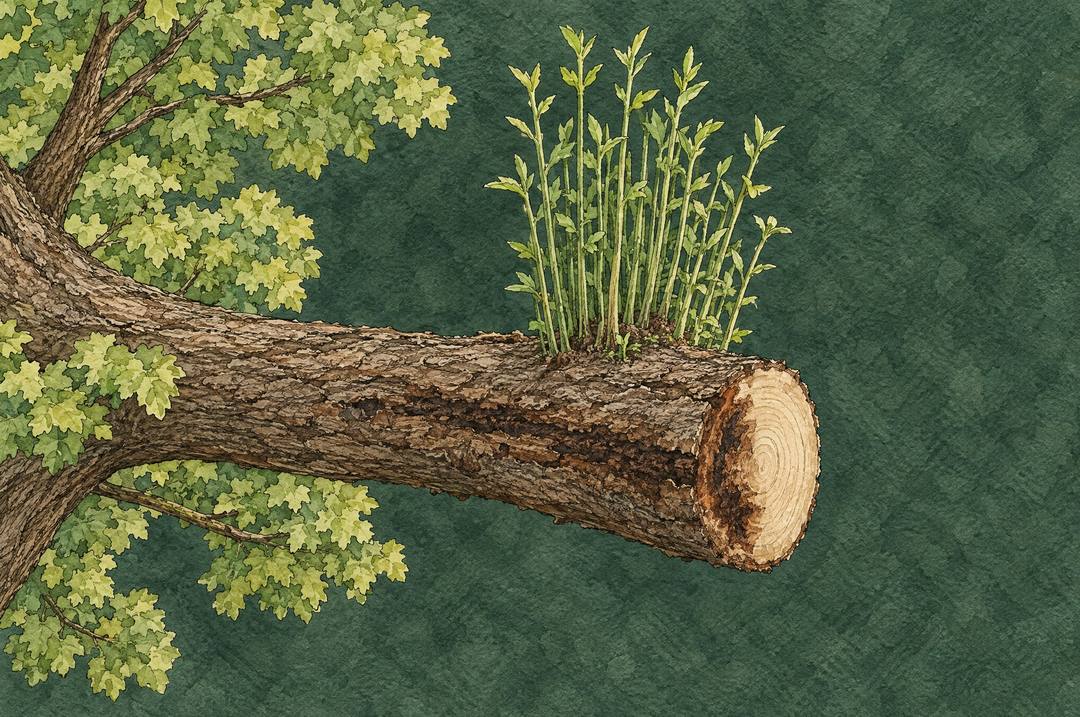
A heading cut stops a limb in the middle, where no branch can take over. One of our ISA Certified Arborists found heading cuts from an earlier pruning in several spots on a big red oak, with decay running back into the limbs. Topping puts a heading cut on every big limb. We prune back to a side branch big enough to take over.
Flush cuts and stubs
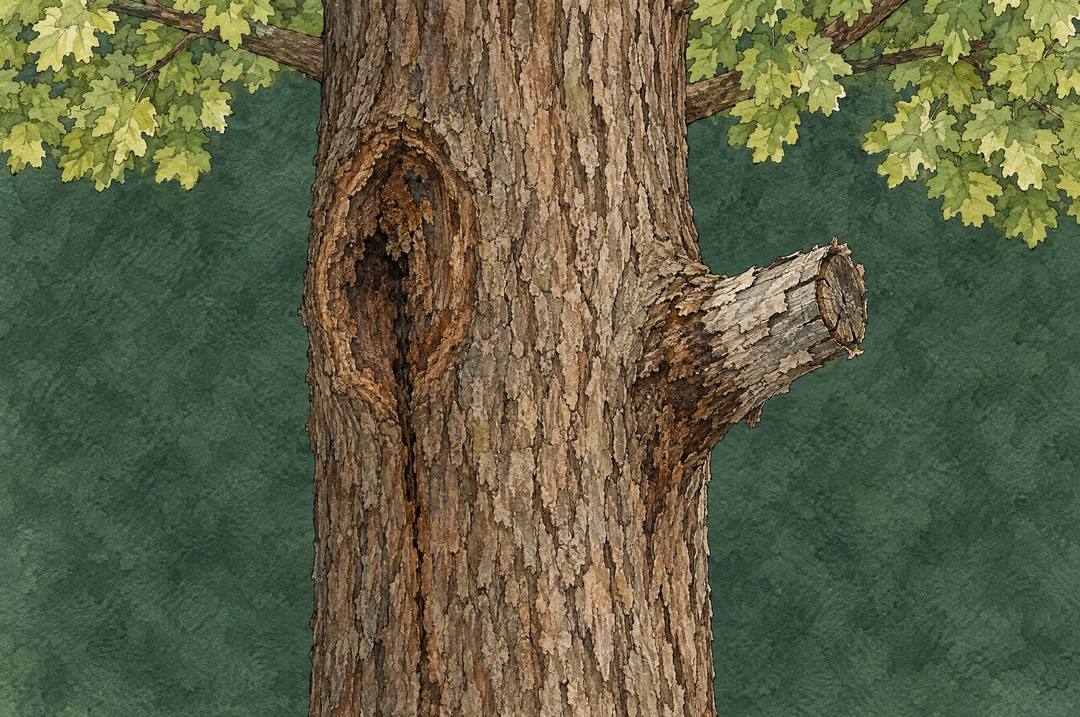
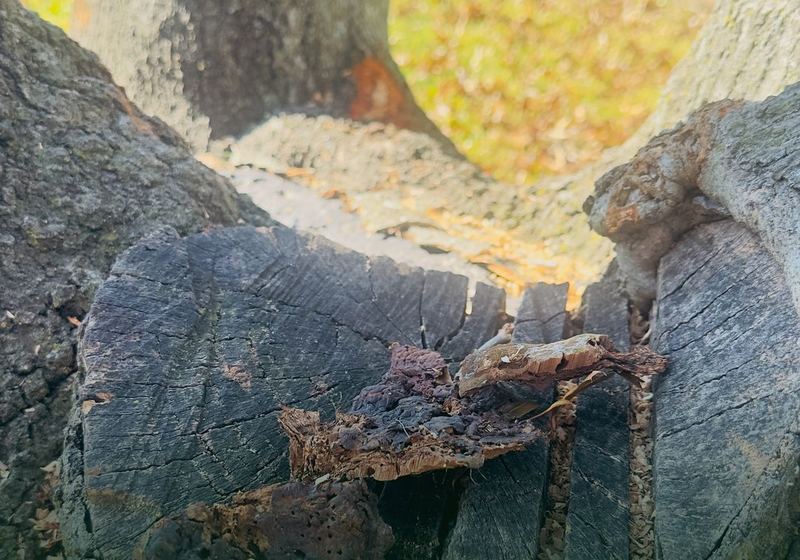
A flush cut goes tight against the trunk and takes the branch collar with the limb. The wound stays open, and decay walks into the trunk. Flush cuts were standard practice for decades, and we still find the results on 30-year-old trees.
A stub does the same damage from the other direction. Leave a stub, 2 inches long or 6, and it dies, then decay works back down it to the trunk before the collar can close anything. We don't leave stubs.
A tree can't heal a wound. It walls it off.
2 cuts that move the weight
Lion's tailing
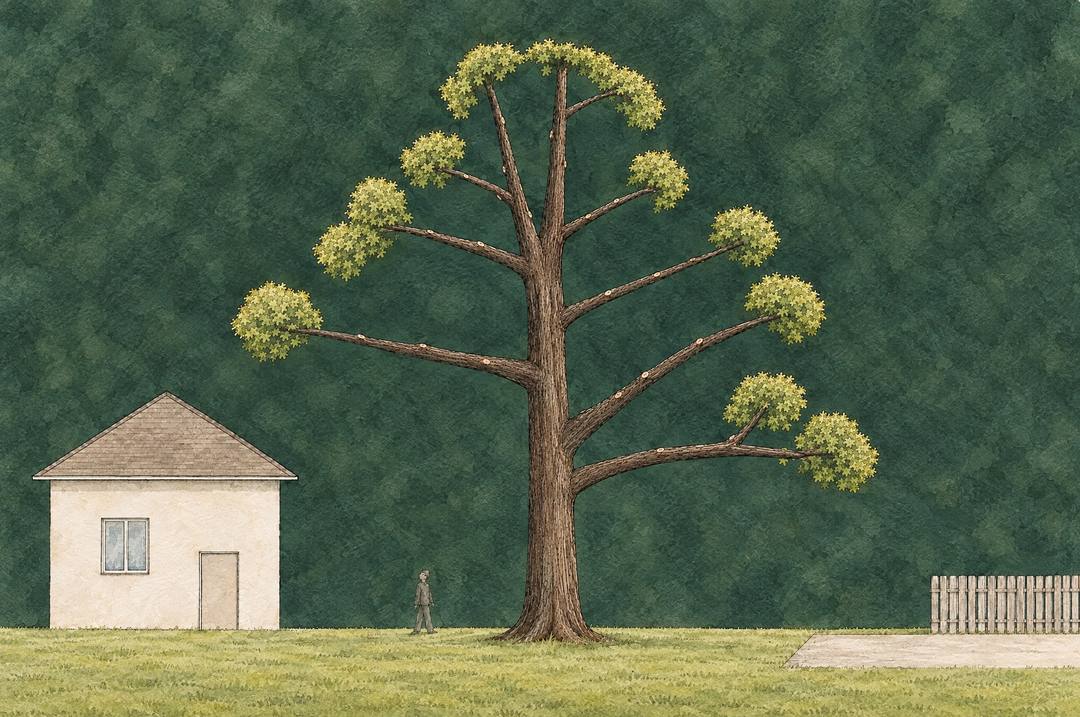
Lion's tailing strips the inside of every limb and leaves the green out at the tips. It looks clean from the street, and it's fast.
Those inside branches spread the weight along each limb. Strip them and the weight piles up at the ends, so every limb works like a lever in wind, rain and ice. The tree answers with more water sprouts, skinny shoots that grow straight up off a big limb. Fixing a lion-tailed tree can take several rounds of pruning, depending on how much was stripped.
Brian had 3 trees a crew had lion-tailed years ago. Our arborist brought them back to a more natural state and cleared the dead and crossing branches.
Over-raising
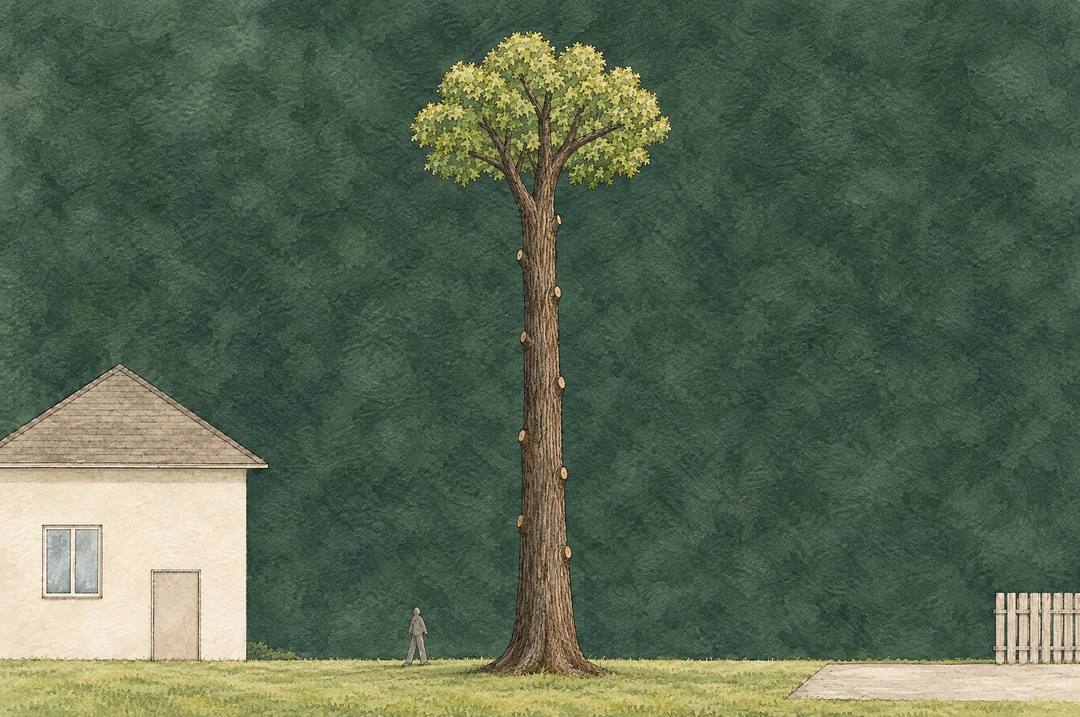
Over-raising takes off low limbs one after another until the leaves sit at the top of the tree. It moves the weight higher and puts more strain on the trunk, and nobody can put those limbs back. So when taking a low limb off would raise the tree too far, a Crown Clean Prune shortens it instead.
Section 06
6 questions to ask before anyone climbs your tree.
You have 2 quotes on the same tree, and they're far apart. 2 quotes can buy 2 different jobs. One quote might cover the ends of the limbs and the low branches. The other might send a climber up to the fork in the middle. Ask these 6 questions before anyone climbs, and you'll know which job each quote buys.
Who walks the tree with me and writes the plan?
You want an arborist who walks it with you before anyone climbs, points to each limb that comes out and the branch that takes over, and puts the problems in writing.
Does the company have an ISA Certified Arborist on staff?
Ask for a name and a certification number. It's a credential you can verify.
Where will each cut go?
A limb comes off just outside the branch collar, the swollen ring where it meets the trunk. A limb they shorten ends at a side branch at least a third as thick as the piece that comes off.
Will the inside branches stay?
You want a yes. Those small branches spread the weight along each limb. Strip them and leave the green at the tips, and that's lion's tailing: every limb starts to work like a lever in wind.
What will this visit leave for next time?
Your quote should say, in plain words, what this visit won't fix and what waits for next time.
What will my yard look like when you leave?
Ask what the crew hauls off and how the yard looks when the truck pulls out. "We'll clean up" doesn't answer either one.
Bring these to your free arborist consultation. Give us a call at 972-970-9989.
Book my free arborist consultationSection 07
When to prune.
When to prune, at a glance
- We prune oaks from November through January, and December and January are the safest.
- Winter suits work on the frame, since every limb shows once the leaves drop.
- In summer heat we take less, so thin bark stays shaded.
- Before ice season, look up at what hangs over your roof and drive.
- A cracked or hanging limb over the house can't wait for a season. Give us a call at 972-970-9989.
Prune an oak in April and you might kill it. Prune the same oak in November and you're fine.
The reason is oak wilt, a fungus that beetles carry from tree to tree, and the beetles follow the scent of a fresh cut.
Texas A&M Forest Service puts the high-risk pruning window at February through June. Outside that window, beetle activity drops off. A warm week in late January can wake the beetles, so the safest oak pruning happens in the cold stretches of December and January.
That goes for live oak, red oak, bur oak and post oak, and it's why our oak schedule fills up from November on.
Most cuts don't need wound paint, since a clean cut walls itself off. Some jobs call for it, and we'll paint any cut you ask us to.
In summer your cedar elm is a green wall. In winter it's a drawing, with every fork and old mistake out against the sky. That's why arborists like winter for work on the frame: they can see every limb the tree grew.
A North Texas ice storm puts weight on every limb, and a weak joint is the first to go. It finds the broken limbs and adds 500 pounds or more.
Before ice season, look up at what hangs over your roof and driveway: dead limbs, a crack where a big limb meets the trunk, a tight V between 2 stems with bark in the seam instead of solid wood, and broken wood still hanging.
Dead and hanging wood is Crown Clean work. For a limb over the roof, stay off the ladder. Weight shifts when you cut, so that limb comes down on ropes. That's a rigging job.
Before you pick up a saw
If it takes a ladder or a chainsaw, give us a call. A limb shifts as you cut it, and a big one comes down on ropes. Near a power line, call your electric company. A cut in the wrong spot stays in the tree for life.
Book a free arborist consultation.
Step 01
Pick a time.
Tap the button and book a time on our calendar.
Step 02
Our arborist walks the tree.
We pick each limb that comes out and the branch that takes over.
Step 03
You get the prescription in writing.
What we prescribe, what it fixes and what it doesn't. You say yes or not yet.
Volume I of the Field Guide covers the soil under your tree: The Homeowner's Field Guide to Soil-First Tree Care.