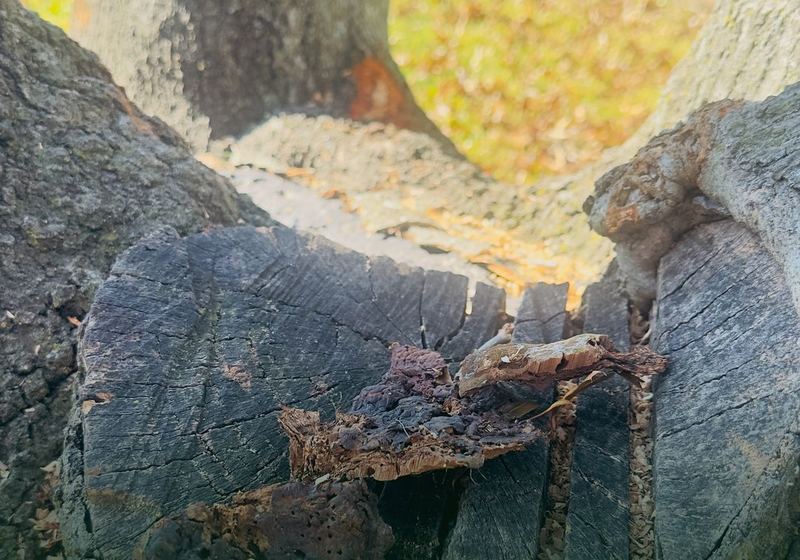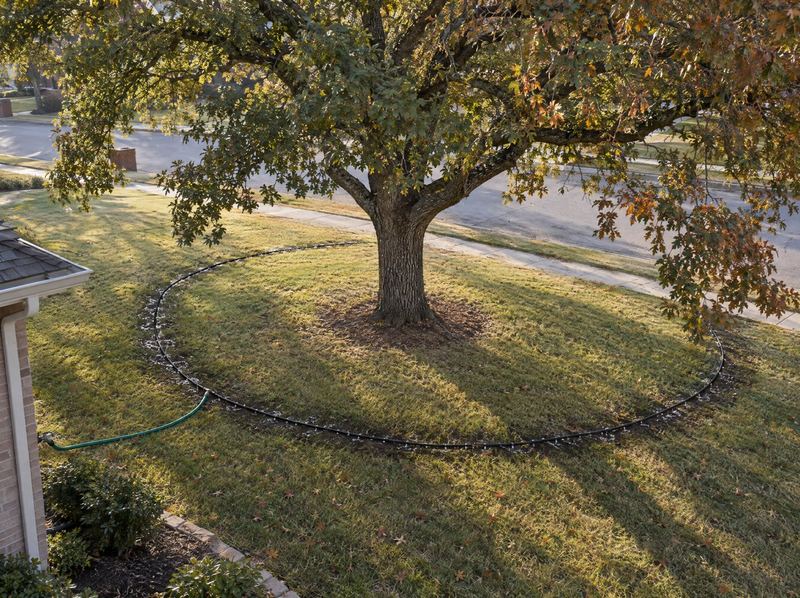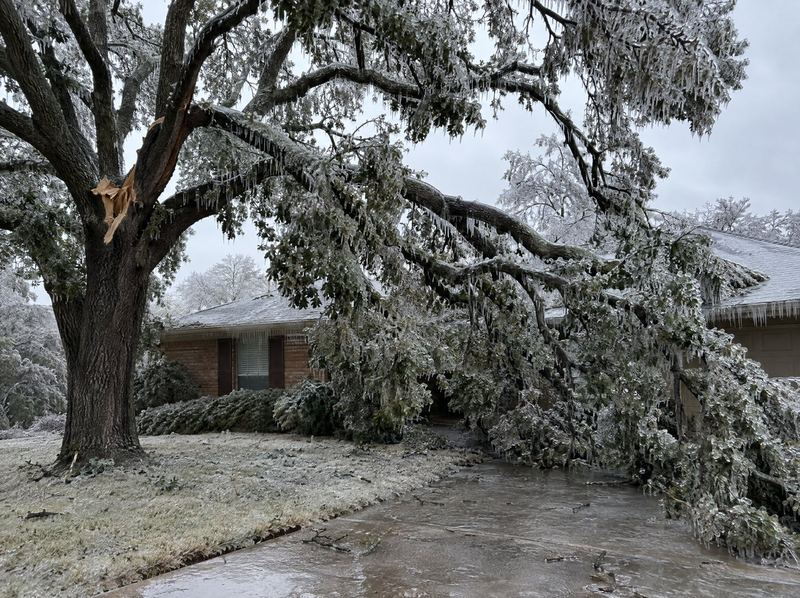
Winter is when you can see the tree.
In July your cedar elm is a green wall.
The question this tip answers
What should I look for in my trees once the leaves drop?
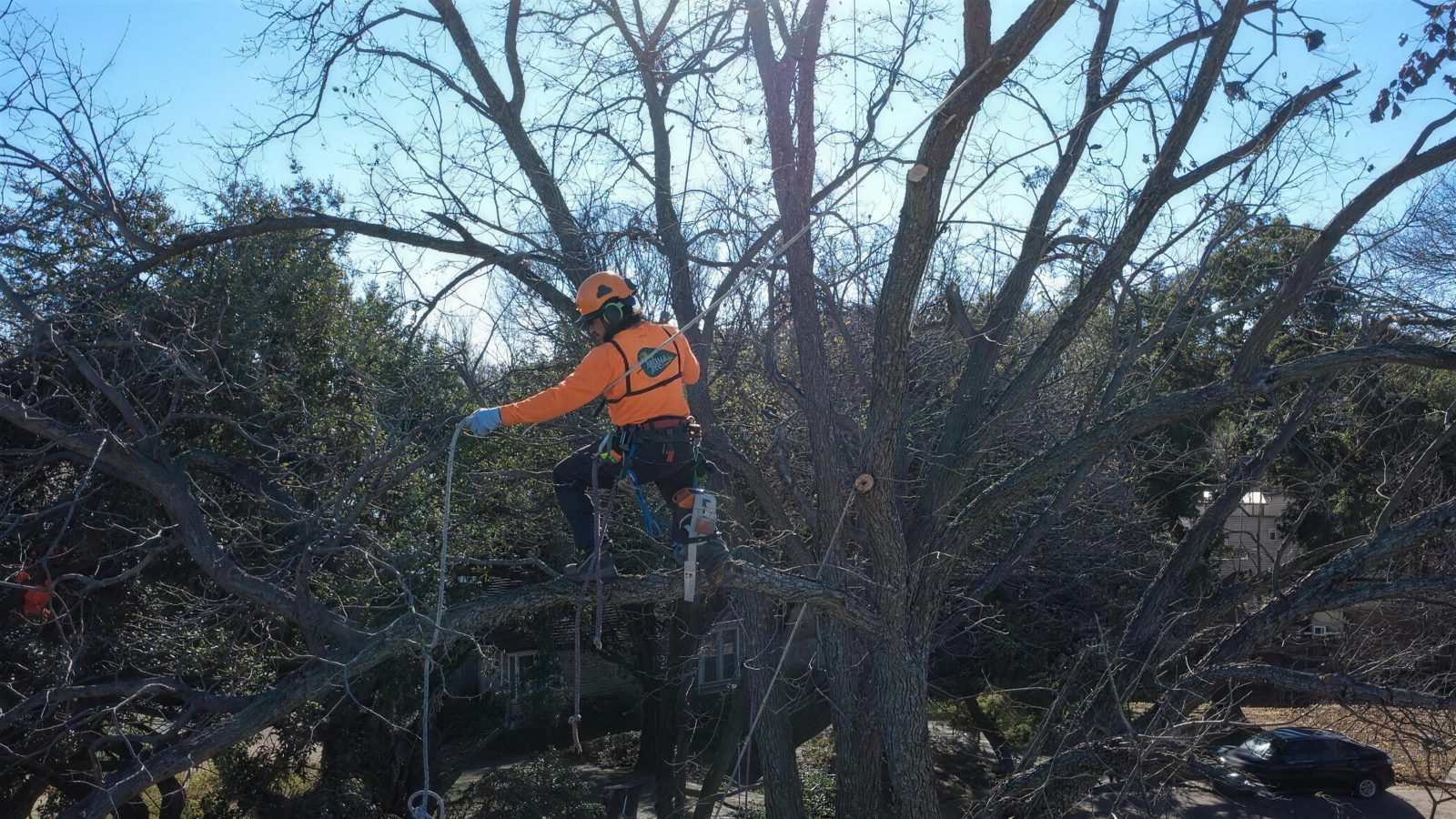
In December it's a drawing, with every fork and old mistake out against the sky.
That's why arborists like winter for structural pruning. With the leaves down, we can see every limb the tree grew. The tree is dormant, most of the pests that find fresh cuts are quiet, and a late-winter cut starts closing as soon as spring growth begins.
On a clear afternoon, stand 30 feet back from each tree, then walk underneath and look up. You're looking for 4 things.
Rubbing limbs. Two branches crossing and wearing through each other's bark. Every windy day opens that wound back up.
Two leaders. A young tree with 2 stems racing for the top will split at that fork someday. Pick one while it's small.
Limbs growing inward. A branch that heads back through the middle of the crown crowds the others and shades itself out.
Water sprouts. Skinny shoots growing straight up off a big limb. They're the tree's answer to an old bad cut, and they grip the outer wood, not the core of the limb.
A small limb on a young tree is a handsaw job you can do. Cut just outside the collar, the swollen ring where the branch meets the trunk. A mature tree, or anything over your head, needs a pruning plan. That part is ours.
Live oaks keep their leaves, so walk under those and look up. Oaks also run on their own calendar. See Tip 08.

Want an arborist to look at yours?
Book a free consultation. An ISA Certified Arborist will walk the tree with you and tell you what it needs.