The mulch volcano is killing your tree.
Drive any street in Plano and you'll see them.
The question this tip answers
How much mulch should go around a tree?
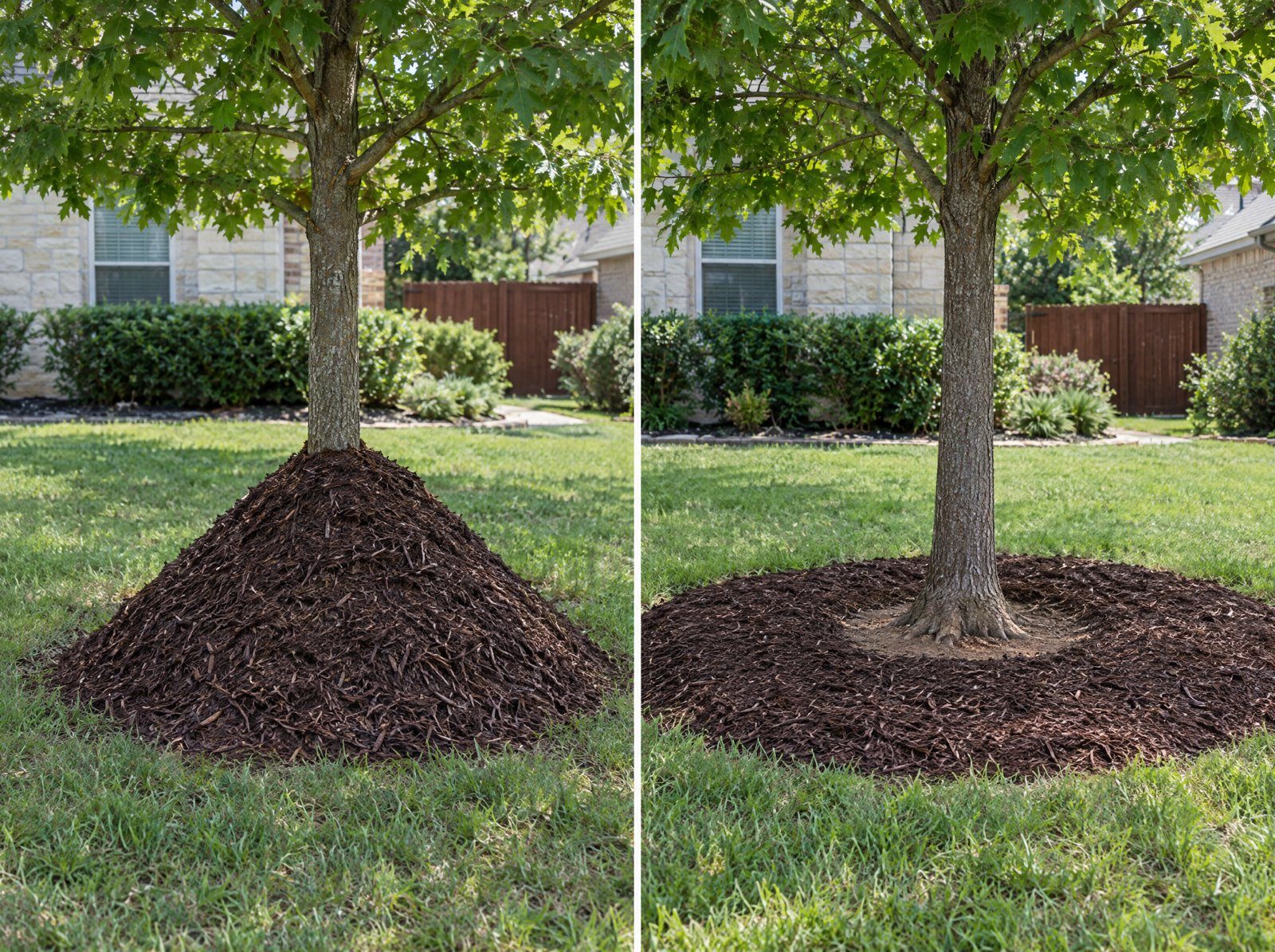
Cones of mulch piled a foot up the trunk, tidy as a birthday cake. Somebody paid for that, and it's rotting the tree.
Bark handles rain and sun. It doesn't handle being buried. Mulch against the trunk holds moisture on bark that's built to dry out, and the bark softens, then decays. Once that band of decay wraps the trunk, the tree can't move sugar down to the roots. It takes 5 or 10 years and it looks like nothing is wrong the whole time.
The second problem is quieter. Roots follow moisture, so a buried trunk invites roots to grow up into the mulch and circle back around the trunk. Those are girdling roots, and they strangle the tree from the outside in. We find them on 15-year-old live oaks that have never looked right and nobody knew why.
What good mulch looks like: 3 inches deep, spread out to the edge of the canopy if you can, and pulled back 3 to 4 inches from the trunk so you can see the root flare. A doughnut, not a volcano.
If your trees already have volcanoes, pull the mulch back this weekend. It's free, it takes 20 minutes, and it's one of the highest-value things you can do for a tree.

Want an arborist to look at yours?
Book a free consultation. An ISA Certified Arborist will walk the tree with you and tell you what it needs.